
Belonging & Community · Family Relationships
The Healing Power of Shared Stories
Think about the last time someone really listened to you tell a story. Maybe it was a friend who laughed at the right moments, or a grandparent who leaned in when you described a hard day. In that moment, something shifted. You felt less alone, more understood, and a little more connected to the world around you. That is the quiet power of a shared story.
For families, and especially for families navigating more than one culture, stories can be a lifeline. They carry history, values, and hope from one generation to the next. They can also help heal the loneliness many people feel even when surrounded by loved ones. In this post, you will learn why storytelling matters so much for belonging, how untold stories can create distance, and practical ways to bring more meaningful storytelling into your family life.
Why Stories Matter So Much to Belonging
Humans have always made sense of the world through stories. Long before written records, families and communities passed down knowledge, warnings, and wisdom through the tales they told around meals and fires. Stories help us answer some of life's biggest questions: Who am I? Where do I come from? Where do I fit?
When we share our stories and have them received with care, we experience something essential: the feeling of being known. Belonging is not only about being present in a group. It is about being seen for who we really are. Stories create that bridge, turning a room full of people into a circle of connection.
Stories Build Identity
Children develop a sense of self partly through the stories they hear about their family. Knowing that a grandparent overcame hardship, or that parents faced their own fears and kept going, can give young people a sense of roots and resilience. These narratives say, "You are part of something larger than yourself."
Stories Pass Down Values
Families rarely sit children down to list their values. Instead, values travel through stories: the uncle who worked two jobs so his siblings could study, the grandmother who shared food with neighbors during lean years, the parent who stood up for a classmate. These stories teach generosity, perseverance, and loyalty far more vividly than any rule could.
Stories Reduce Isolation
Isolation often grows in silence. When people assume no one else has felt what they feel, shame can take hold. Hearing someone else's story, especially one that echoes our own, can break that spell. A teenager who learns that a parent also felt out of place at school, or an adult who hears a sibling describe the same childhood worries, suddenly has company in an experience that once felt private. Our article on the invisible struggles we all carry explores how naming hidden pain can make it lighter.
When Stories Go Untold
Not every family story is easy to tell. Some carry grief, migration, loss, or trauma. In many families, painful chapters are simply never spoken aloud. Parents may stay quiet to protect their children, or because speaking about suffering was never modeled for them.
Silence can be an act of love, yet it can also leave gaps. Children may sense that something important is missing without knowing what it is. Unspoken experiences can show up in other ways, through anxiety, tension, or patterns that repeat across generations. This is one reason work focused on intergenerational trauma often begins with gently exploring the stories families have and have not told.
The Weight of Living Between Cultures
For children of immigrants and multicultural families, untold stories can add to a sense of living between two worlds. Young people may feel disconnected from a heritage they only partly understand, while parents may feel their experiences are invisible to children raised in a different culture. Our reflection on living between two worlds as an Asian American speaks to this experience in depth.
When Silence Becomes Distance
Over time, the absence of shared stories can make family members feel like strangers. Conversations may stay on the surface: grades, schedules, chores. The deeper layers of who each person is remain hidden, and connection weakens without anyone quite noticing how it happened. The good news is that distance built through silence can often be narrowed through small, intentional moments of sharing.
Ways Shared Stories Help Families Heal
Storytelling is not a cure-all, but it can be a powerful part of healing. When done with care and at a pace that feels safe, sharing stories can open doors that have been closed for years. Here are some of the ways it helps.
- It builds empathy. Hearing a parent describe their own childhood can help a teen understand why certain rules or reactions exist.
- It honors resilience. Stories of survival remind families of the strength already woven into their history.
- It creates new meaning. Revisiting a painful memory with support can help someone see it from a new angle.
- It invites mutual respect. When everyone has a chance to speak and be heard, hierarchy softens and connection grows.
- It strengthens cultural identity. Stories keep traditions, language, and values alive for the next generation.
Families can also write new chapters together. Our post on creating new family stories together explores how shared experiences today become the treasured memories of tomorrow.
Bringing More Storytelling Into Family Life
You do not need a special occasion or a trained facilitator to start sharing stories. Small, consistent habits often matter most. The ideas below are simple starting points that can be adapted to your family's culture, ages, and comfort level.
1. Make Room at the Table
Mealtimes are natural storytelling moments. Try setting aside a few minutes to ask open-ended questions like "What was the best part of your day?" or "What is something you learned recently?" Keep devices away so everyone can focus.
Over time, these small exchanges build trust and make deeper conversations feel more natural.
2. Ask Elders About Their Lives
Grandparents and older relatives often carry a wealth of stories that are rarely asked about. Invite them to share memories of childhood, favorite foods, or how they met their partners. Some families record these conversations to preserve them.
Be patient if some memories are difficult. Let elders decide how much they want to share. If a relative speaks a language the children are still learning, a bilingual family member can help translate, turning the conversation itself into a bridge between generations.
3. Use Photos and Objects as Prompts
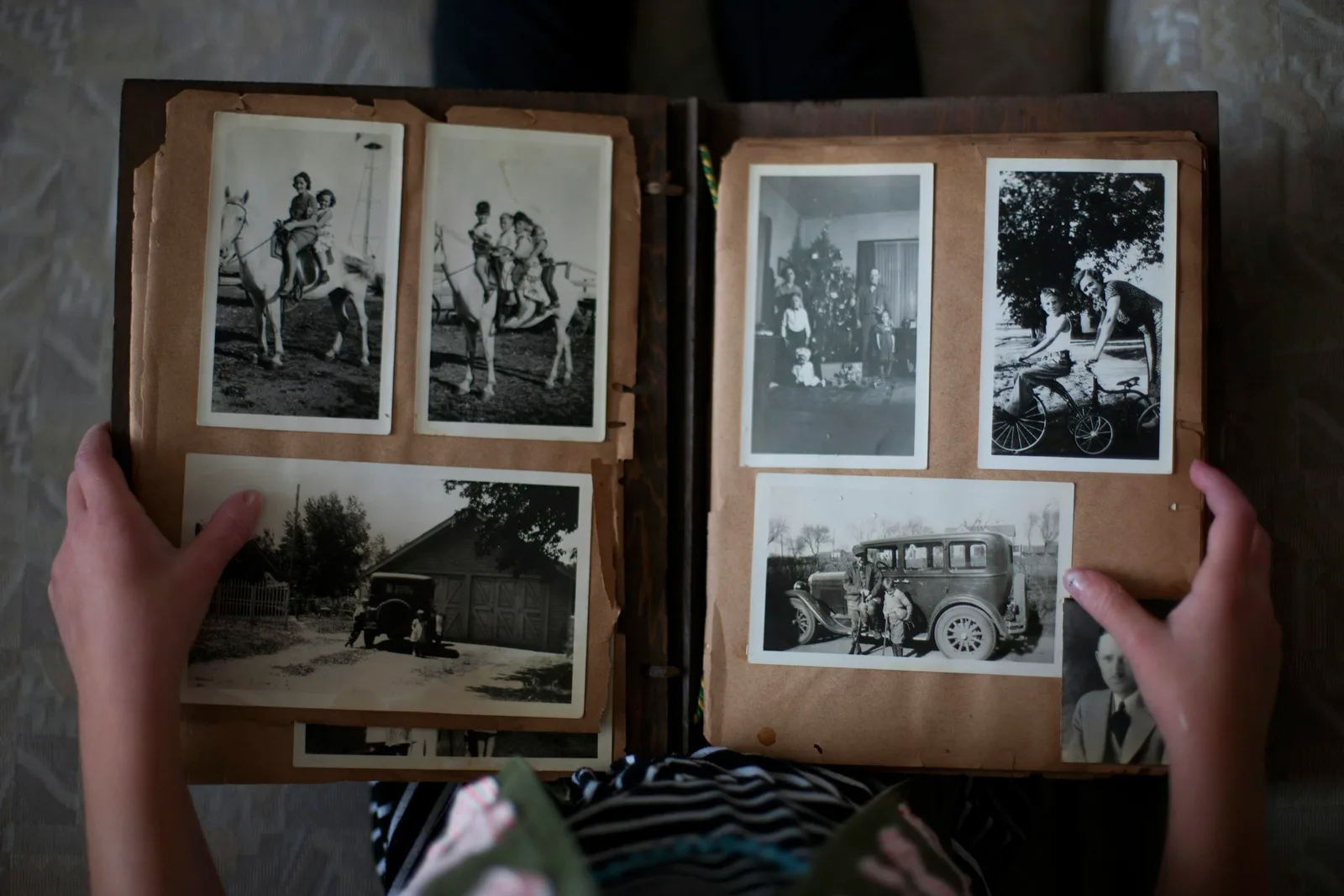
Old photographs, recipes, heirlooms, or keepsakes can spark stories that might never come up otherwise. Looking through an album together gives everyone something to focus on and can make sharing feel less intimidating.
Children often love hearing the story behind an object they have seen for years. A chipped teacup or a worn recipe card can suddenly become a doorway into a great-grandparent's life.
4. Share Your Own Stories Honestly
Parents who share age-appropriate stories about their own struggles model vulnerability. A story about feeling nervous before a test, or making a mistake and recovering, shows children that difficulty is part of life.
Your honesty gives them permission to be honest, too. It also helps them see you as a whole person, not only as the one who makes the rules.
5. Listen Without Fixing
When someone shares, resist the urge to correct, lecture, or solve. Simply reflecting back what you heard, such as "That sounds like it was really hard," helps the storyteller feel understood.
Listening well is often more healing than any advice. If a story brings up strong feelings, it is fine to pause, thank the person for trusting you, and return to the conversation another day.
A few of these practices, repeated gently over time, can transform the emotional climate of a home.
Finding Community Beyond the Family
Belonging does not end at the front door. Many people, particularly those who do not fit neatly into traditional categories, find meaningful connection in chosen communities, cultural groups, faith spaces, and friendships. Hearing stories from people with shared experiences can be deeply validating.
If you have ever felt like you did not quite belong anywhere, you are not alone. Our article on creating belonging when you don't fit traditional categories offers encouragement, and our post on finding your tribe as a multicultural family shares ideas for building community that reflects who you are.
Sometimes families need extra support to begin telling difficult stories safely. Family therapy can offer a structured, compassionate space where each person's experience is honored and where painful chapters can be explored with guidance rather than avoided.
Conclusion: Your Story Is Worth Telling
Stories are one of the oldest ways humans heal. They help us understand where we come from, feel less alone in our struggles, and imagine a more connected future. Whether it is a grandparent's memory, a teenager's honest confession, or a parent's story of hardship and hope, every shared story strengthens the threads that hold a family together.
If your family is carrying stories that feel too heavy to share alone, support is available. Nabi Family Therapy works with families of many backgrounds, with particular care for cultural identity and intergenerational patterns. Contact our team to explore how therapy might help your family find its voice together and begin writing its next chapter.

Ready to take the next step together?
Our care team reads every inquiry and can help you find the right fit.