
Parent Coaching · Family Healing
Parenting Through Your Own Childhood Wounds

You promised yourself you'd parent differently. You swore you wouldn't repeat the patterns that hurt you as a child. Yet here you are, hearing your parents' words come out of your mouth, feeling that familiar flash of anger that once terrified you, or shutting down emotionally just when your child needs you most. The shame is overwhelming. You love your children deeply, want desperately to give them something better, yet your own unhealed wounds keep showing up in ways that feel beyond your control.
This painful reality affects countless parents: the weight of trying to raise emotionally healthy children while carrying unresolved pain from your own childhood. The good news? It's not only possible to heal while parenting, but it's also one of the most transformative journeys you can take. When you address your childhood wounds, the benefits ripple throughout your entire family system, creating the generational change you've always hoped for.
Understanding How Childhood Wounds Show Up in Parenting
Childhood wounds aren't just memories of difficult experiences; they're deeply embedded patterns of thinking, feeling, and responding that shape how we show up in relationships, especially with our children. When your child cries, has a tantrum, defies you, or needs emotional support, these moments can trigger your own unprocessed childhood experiences in ways you might not even recognize.
Perhaps you were raised in a home where emotions weren't allowed or acknowledged. Now, when your child expresses big feelings, you feel an overwhelming urge to make them stop, not because you don't love them, but because emotional expression still feels dangerous based on what you learned growing up. Or maybe you experienced harsh punishment, and now you struggle to set appropriate boundaries with your own kids, terrified of becoming the authoritarian parent who hurt you.
Intergenerational trauma passes down through family systems in complex ways. You might find yourself recreating dynamics you experienced, even when you consciously want something different. Or you might swing to the opposite extreme, overcompensating for what you lacked in ways that create their own problems. Neither reaction is your fault; these are adaptive responses to survival experiences that made sense in your childhood context.
The most painful moments often come when you recognize your parents' patterns in your own behavior. That moment when you yell and see fear in your child's eyes, the same fear you felt as a child. When you shut down emotionally and watch your teen stop trying to connect, just like you eventually stopped trying with your own parents. These recognition moments, while agonizing, are also opportunities for change.
Common childhood wounds that affect parenting include emotional neglect where your feelings weren't validated or acknowledged, creating difficulty attuning to your children's emotional needs, harsh or inconsistent discipline leading to struggles with boundary setting and emotional regulation, parentification where you cared for adults or siblings instead of being cared for resulting in difficulty allowing yourself to have needs, criticism or high expectations causing perfectionism and difficulty accepting your children's normal developmental struggles, family addiction or mental illness creating hypervigilance and difficulty trusting your children's wellbeing, and cultural or immigration trauma affecting how you navigate identity and cultural expectations with your own children.
The Impact on Your Children and Family System
The reality that's hardest to face is that unhealed childhood wounds don't just affect you; they ripple out to touch your children and shape your family's emotional landscape. This isn't about blame or judgment, but about understanding how patterns perpetuate so you can make conscious choices to change them.
When parents carry unresolved trauma, children develop their own adaptive responses. They might become hypervigilant to your moods, learning to scan for danger signals just as you once did. They may suppress their emotions to avoid triggering your reactions, losing touch with their own internal experiences. Some children become parentified, taking care of your emotional needs in ways that rob them of their childhood innocence.
Parent-child relationships suffer when your wounds interfere with attunement and connection. You might struggle to be emotionally present when your child needs comfort, not because you don't care, but because vulnerability still feels dangerous. Or you might overreact to normal childhood behaviors because they unconsciously trigger your own unresolved pain. Your child doesn't understand why you sometimes seem unreachable or why small things provoke big reactions, leading to confusion and disconnection.
Sibling dynamics can become complicated when your triggers affect how you respond to different children. Perhaps one child's temperament unconsciously reminds you of yourself or a family member, leading to different treatment even when you're trying to be fair. Or your wounds might make it difficult to manage sibling conflict effectively, either overreacting or avoiding necessary intervention.
The family atmosphere itself can become organized around managing your triggers and wounds. Partners may walk on eggshells, children learn what topics to avoid, and everyone develops strategies for preventing situations that might activate your pain. While these adaptations come from love, they also create barriers to authentic connection and prevent your family from addressing real concerns directly.
For teen children, unhealed parental wounds can particularly complicate their developmental need for increasing independence. Your own childhood experiences with authority, autonomy, or separation might make it difficult to navigate their natural push for independence, creating conflict patterns that feel impossible to break.
Breaking Cycles: The Path to Healing
Here's the profound truth: by choosing to heal your childhood wounds, you're not only transforming your own life but creating a new legacy for your children and future generations. The cycle can end with you. Breaking intergenerational patterns is some of the most courageous work anyone can do, and you don't have to do it perfectly to make a meaningful difference.
Healing while parenting requires acknowledging that you're carrying wounds from your childhood without shame or self-judgment. This isn't about blaming your parents or dwelling on past pain, but about understanding how your childhood experiences continue to influence your present parenting in ways that limit your ability to show up fully for your children.
The healing journey involves several key elements, each building on the others to create lasting change:
1. Developing Self-Awareness
Learning to recognize when you're being triggered by your child's behavior versus responding to the actual situation allows you to pause before reacting from your wounds.
2. Processing Your Own Trauma
Therapy helps you work through unresolved childhood experiences so they no longer control your present reactions, often using approaches like EMDR for processing traumatic memories.
3. Learning New Patterns
You need to actively develop the parenting skills and emotional regulation tools you never learned in childhood, building the capacity for presence and attunement you may not have experienced yourself.
4. Practicing Self-Compassion
Healing requires treating yourself with the kindness you wish you'd received, understanding that your wounds aren't your fault even as you take responsibility for healing them.
5. Repairing With Your Children
When you do react from your wounds, you can acknowledge this with age-appropriate honesty and repair the rupture, teaching your children that mistakes can be healed.
Many parents worry that healing will take too long or that they've already damaged their children irreparably. The truth is that children are remarkably resilient, and research shows that repair is more important than perfection. Your willingness to face your wounds and work on them models emotional health for your children in powerful ways.
The Role of Therapy in Healing While Parenting
Professional support becomes crucial when you're working to heal childhood wounds while actively parenting. Individual therapy provides a safe space to process your own trauma without burdening your children with adult concerns. Parent coaching gives you practical tools and strategies for managing triggers in real-time. Family therapy helps repair relationships and create new patterns of connection.
The therapeutic process for healing childhood wounds while parenting differs from traditional therapy because it holds both your needs and your children's well-being in view simultaneously. Your therapist helps you understand how your childhood experiences affect your parenting while developing skills to respond differently when triggered. This dual focus allows you to heal your past while actively creating a different future for your family.
EMDR therapy can be particularly effective for parents with childhood trauma because it processes traumatic memories at a neurological level, reducing their emotional charge and power over your present reactions. As traumatic memories become less triggering, you naturally become more present and attuned with your children, able to respond to their needs rather than reacting from your wounds.
Many parents find that therapy helps them grieve what they didn't receive in childhood, an essential step before fully offering something different to their own children. This grieving process isn't selfish or self-indulgent; it's necessary healing work that ultimately benefits your entire family. As you process your losses and pain, you create emotional space to show up more fully for your children.
Group therapy or parenting support groups can also be invaluable, connecting you with other parents navigating similar challenges. The isolation that comes with shame about your wounds begins to dissolve when you discover you're not alone. Other parents understand the specific pain of watching yourself repeat patterns you swore you'd never perpetuate, and together you can support each other's healing journey.
Culturally-Informed Healing for Parents
Your childhood wounds don't exist separately from your cultural context, and healing must honor the complex intersections of culture, family values, and intergenerational patterns. For many parents from immigrant or multicultural backgrounds, childhood wounds are inseparable from experiences of cultural displacement, racism, or navigating between worlds.
Asian American parents, for example, might carry wounds related to high expectations, emotional stoicism, or the prioritization of family duty over individual needs. These cultural values contain both wisdom and potential harm, requiring a nuanced understanding rather than wholesale rejection. Latino parents might navigate wounds related to machismo, marianismo, or the pressure to maintain cultural traditions while adapting to new contexts.
The challenge becomes honoring your cultural heritage while healing from specific family patterns that caused pain. This isn't about choosing between your culture and your healing, but about finding ways to embody the strengths of your cultural background while leaving behind patterns that no longer serve your family's wellbeing.
At Nabi Family Therapy, we understand that healing childhood wounds requires cultural responsiveness and humility. We help parents explore how cultural values and expectations shaped their childhood experiences, identify which aspects of their cultural heritage they want to preserve and pass down, address culturally-specific forms of trauma like immigration-related losses or racial trauma, and find ways to bridge different cultural values between generations without repeating harmful patterns.
Many parents feel caught between honoring their parents and culture versus protecting their own children from similar wounds. With culturally-informed support, you can hold both truths: appreciating what your parents gave you within their context while choosing to do things differently based on your current understanding and circumstances.
Practical Strategies for Healing While Parenting
While deep healing requires time and often professional support, there are practical strategies you can implement immediately to begin interrupting harmful patterns and responding more consciously to your children.
Develop Awareness of Your Triggers
Start noticing which of your children's behaviors or emotions consistently provoke strong reactions, keeping a simple journal to identify patterns showing where your childhood wounds affect your parenting.
Practice the Pause
Even a few seconds of breathing before responding can interrupt the automatic reaction patterns rooted in your wounds, creating space to choose your response rather than react unconsciously.
Cultivate Self-Compassion
Rather than drowning in shame when you react from your wounds, acknowledge that your reaction makes sense given your history and treat yourself with the same kindness you'd offer a good friend.
Learn to Repair With Your Children
Age-appropriate repair teaches your children that mistakes can be healed and that adults can take responsibility, using phrases like "I'm sorry I yelled earlier. That was about my own feelings."
Build Your Capacity for Regulation
Practices like mindfulness, breathing exercises, movement, or creative expression help you stay regulated so you're less likely to be hijacked by triggers and more able to respond thoughtfully.
Connect With Other Parents
Breaking the isolation around childhood wounds through therapy groups, online communities, or trusted friends reduces shame and provides crucial support for continuing the healing work.
These strategies aren't about becoming perfect but about gradually increasing your capacity to respond consciously rather than react from unhealed wounds.
Moving Forward With Hope and Compassion
Parenting through your own childhood wounds is challenging, but your awareness and willingness to seek support already represent profound change. Healing isn't linear, and you won't get it right every time, but what matters is how you respond with self-compassion, repair, and renewed commitment to the healing journey.
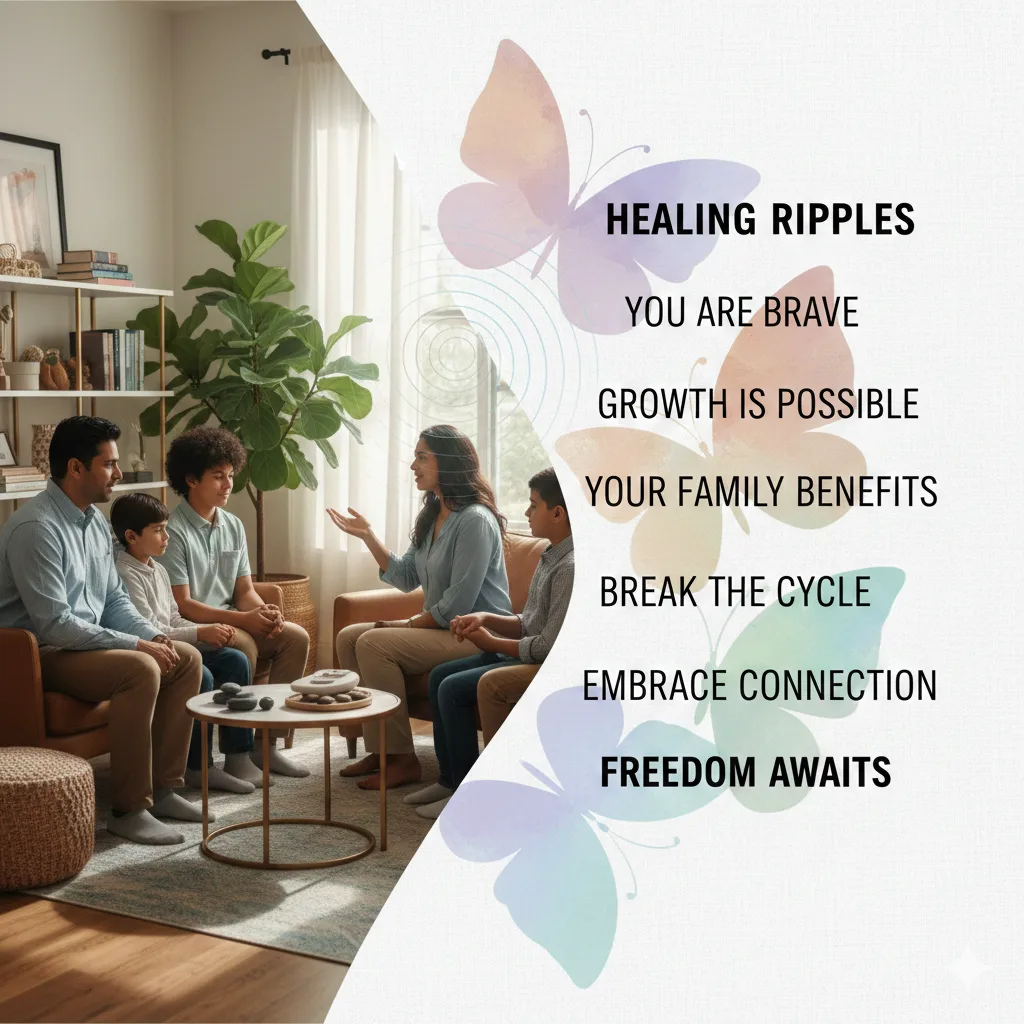
At Nabi Family Therapy, we witness the butterfly effect of parental healing every day. We see family systems reorganize around healthier patterns as parents do their healing work. The cycle can end with you, and the healing ripples out to benefit everyone in your family, now and for generations to come.
If you're ready to heal your childhood wounds while creating something different for your children, contact Nabi Family Therapy today to begin your healing journey as a parent.
At Nabi Family Therapy, we believe that when one person heals, the ripple effects strengthen the whole family. Every family deserves a safe place to grow, connect, and belong together. Get in touch with us today to learn more.


Ready to take the next step together?
Our care team reads every inquiry and can help you find the right fit.